

Caesar salad – healthier, high-protein recipes
Caesar salad is a timeless favourite: crisp romaine lettuce, salty Parmesan and a creamy dressing with lemon and garlic. In this guide, you’ll see how to keep those classic flavours while making the salad more filling and higher in protein, using chicken, a lighter dressing and even a creative pizza-style option with a chicken base.


.svg)
Caesar salad – from classic to smarter choices
According to legend, the Caesar salad was created in the 1920s by a restaurateur in Mexico who had to improvise with whatever ingredients were left in the kitchen. The mix of crisp romaine lettuce, grated Parmesan, egg, olive oil, anchovies, garlic and lemon quickly became a hit and spread around the world.
Today, Caesar salad is often eaten for lunch or dinner, both at home and when eating out, and it’s commonly served with extra toppings like chicken, bacon or croutons. In its classic form, it can be quite energy-dense, mainly because of the dressing, Parmesan and croutons. As the dish has grown in popularity, a question often comes up: can it be made a bit healthier?
The answer is yes. With a few simple tweaks, you can make your salad more filling and balanced. Below are some ideas to help you boost the nutritional value without losing the flavour.
Tips for a healthier Caesar salad
- Boost the protein: add chicken, prawns, tofu or beans to help you feel fuller for longer.
- Lighten the dressing: use cottage cheese as a base instead of a traditional dressing, which is often made with oil and egg yolk. Blended cottage cheese gives a creamy texture, more protein and fewer calories.
- Swap to turkey bacon: it contains less fat and fewer calories, while still giving you that salty, crispy bite.
- Use wholemeal bread for croutons: this adds fibre and helps with fullness.
- Add more veg: extra vegetables increase volume, nutrients and satiety.
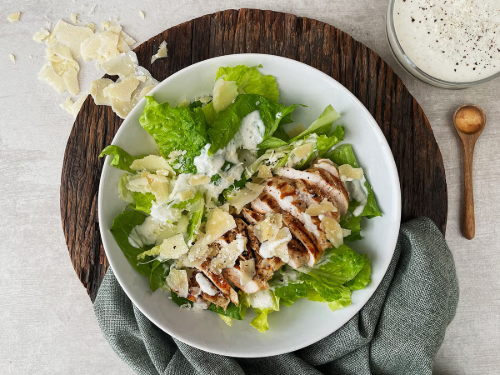
Caesar salad with chicken
A protein-rich option that works well for lunch or dinner. The chicken and cottage cheese dressing add extra protein, and with croutons, the salad becomes a more balanced and filling meal.
Ingredients (serves 4)
Salad
- 800 g chicken breast fillets
- 300 g romaine lettuce
- 30 g coarsely grated Parmesan
- 4 slices wholemeal bread
- 1 tbsp olive oil
Protein-rich Caesar dressing
- 200 g cottage cheese (1.5% fat)
- 100 to 150 ml water
- 2 anchovy fillets'
- 1 small garlic clove
- 1 tsp Dijon mustard
- 0.5 to 1 tbsp lemon juice or white wine vinegar
- Salt and pepper
Method
- Cook or grill the chicken until fully cooked and golden. Season with salt and pepper. Set aside to cool slightly, then slice.
- Cut the bread into small cubes and fry in a little oil until golden. Let the croutons cool on kitchen paper.
- Wash and chop the romaine lettuce. Remove any wilted leaves.
- Finely chop the anchovies and garlic. Add to a bowl and whisk together with the remaining dressing ingredients until smooth. Season to taste with salt and black pepper.
- Toss the lettuce with the dressing and shaved Parmesan. Arrange on a serving dish. Top with sliced chicken and crispy croutons just before serving.
Nutritional values per portion
- 484 kcal
- 65 g protein
- 20 g carbohydrates
- 15 g fat
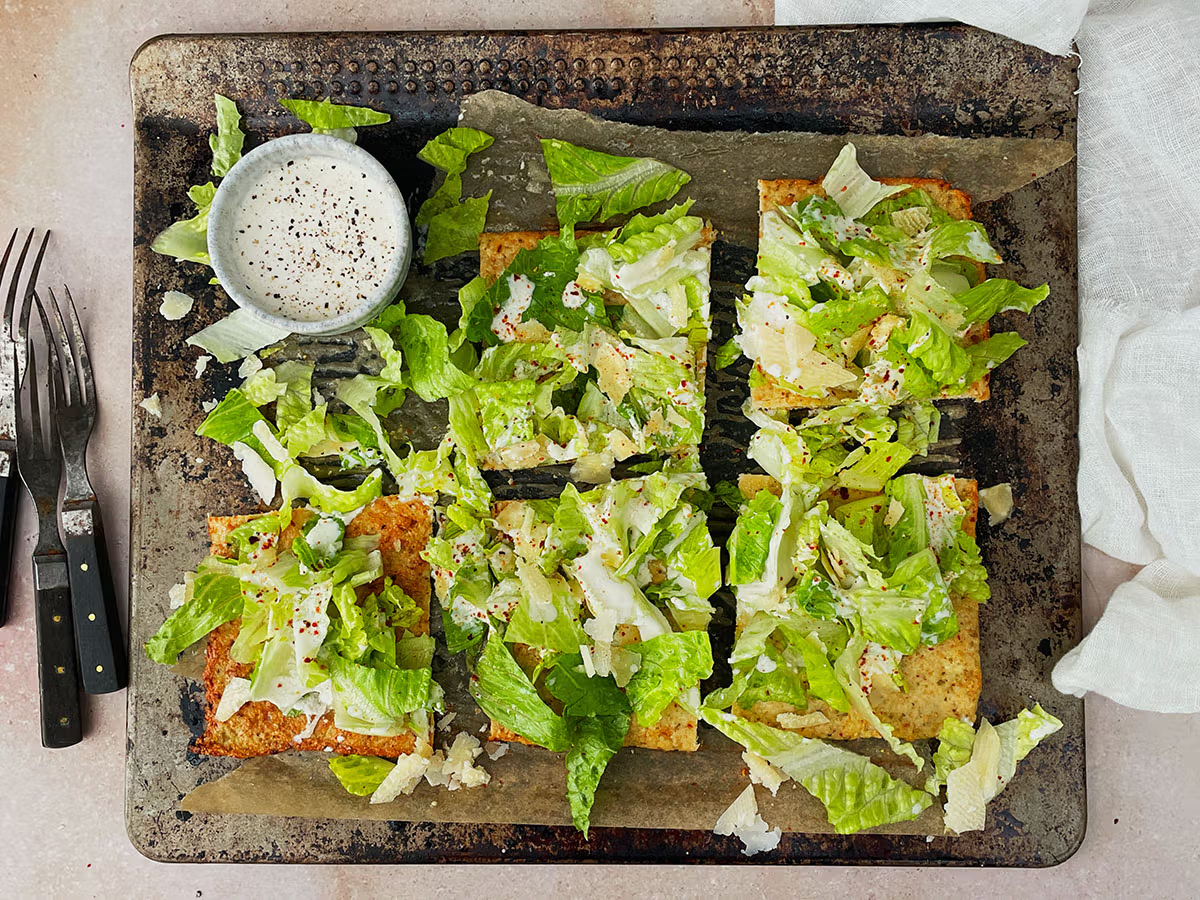
Caesar salad as a pizza – with a chicken base
A good option if you want something a bit different while still keeping those classic Caesar flavours. Here, the pizza base is made from chicken mince and topped with romaine lettuce, Parmesan and cottage cheese dressing. It’s a filling, high-protein meal.
Ingredients (serves 2)
Base
- 400 g chicken mince (11% fat)
- 1 egg
- 1 tsp onion powder
- 1 tbsp oregano
- 1 tsp chilli flakes
- 1 tsp salt
Dressing
- 100 g cottage cheese (1.5% fat)
- 100 ml water
- 1 to 2 anchovy fillets
- 1 small garlic clove
- 1 tsp Dijon mustard
- Salt and pepper
Topping
- 200 g romaine lettuce
- 40 g grated Parmesan
- 1/2 lemon
Method
- Preheat the oven to 200°C.
- Mix the chicken mince, egg and spices.
- Spread the mixture onto baking paper into a thin base.
- Bake for 15 to 20 minutes until firm and lightly golden.
- Blend the dressing until smooth.
- Top the cooled base with romaine lettuce, Parmesan, dressing and a squeeze of lemon.
Nutritional values per portion
- 539 kcal
- 56 g protein
- 5 g carbohydrates
- 32 g fat
- 3.2 g fibre
More ways to enjoy Caesar salad
Caesar salad is said to have come from improvising with what was available in the kitchen. In the same way, you can adapt the recipe based on what you have at home. Swap the chicken for prawns or salmon, or make a fully vegetarian version.
You can also add roasted nuts or seeds for extra texture, thinly sliced red onion or capers for a saltier kick, or a squeeze of extra lemon just before serving for a fresher taste.
By trying different ingredients, dressings and toppings, you can create your own versions to suit different tastes and occasions.


February 18, 2026
April 2, 2026
Start your weight loss journey with Yazen today
Everything you need to do is to create an account and answer some questions about your health
.svg)
.svg)
More articles
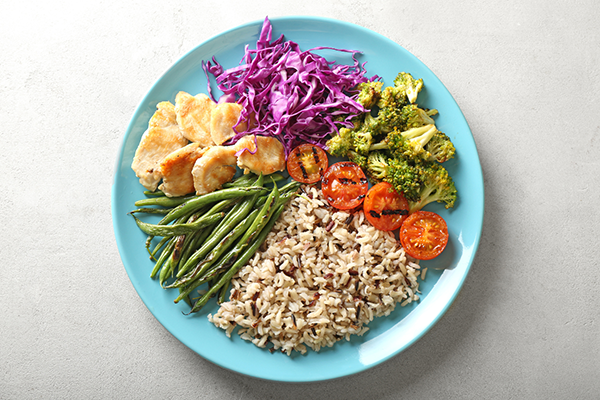

The plate model – a simple guide to balanced meals
The plate model is an educational tool designed to help you eat in a more balanced and healthy way, particularly at lunch and dinner. It serves as a simple guide for planning and assembling nutritious meals without the need for advanced nutritional calculations.

Meal replacements for weight loss: the pros and cons
Meal replacements are sometimes used as a tool for weight loss and weight management. There are lots of different products to choose from, designed to replace one or more meals in a nutritionally balanced way. For some people, they can be a practical support and make it easier to keep track of energy intake, but they are not right for everyone. In this article, we look at the pros and cons of using meal replacements for weight loss.
