

Barbell training for strength and muscle mass
Barbell training can be a simple and effective way to get started with strength training – whether you are a beginner or more experienced. With a few basic exercises, you train several major muscle groups and can adjust both weight and tempo after your daily form. Here you get practical advice on technique, common exercises, and how to train in a safe way.


.svg)
A versatile tool
Training with free weights, especially with a barbell, is an effective way to develop a strong and functional body. Barbell training is often based on large, compound exercises where several muscle groups work together. With the same equipment, you can therefore train the entire body, such as legs, glutes, back, arms, and shoulders. This makes the barbell one of the most versatile tools and can help you build strength, increase muscle mass, and improve coordination. Common exercises are, for example, deadlifts, squats, rows, and shoulder presses.
If you want to train at home, you only need a barbell and some weight plates to get started, which can make it a practical solution to get regular training in without having to go to the gym.
Barbell training suits you who want to:
- Train several muscle groups simultaneously with a few exercises
- Build up basic strength in the entire body
- Train effectively even when time is limited
- Improve balance and body control
- Train basic movements that you benefit from in everyday life
- Gradually increase the load and train with heavier weights once the technique is mastered
6 effective exercises with a barbell
When you are going to train with a barbell, it is smart to start from the body's basic movements: bending, hinging, pressing, and pulling. These are movements that resemble those we do in everyday life, such as lifting something from the ground or sitting down and standing up. Here are the most important exercises to master:
1. Squat
The squat is one of the most basic and effective exercises you can do with a barbell. It primarily trains the thighs, glutes, and core.
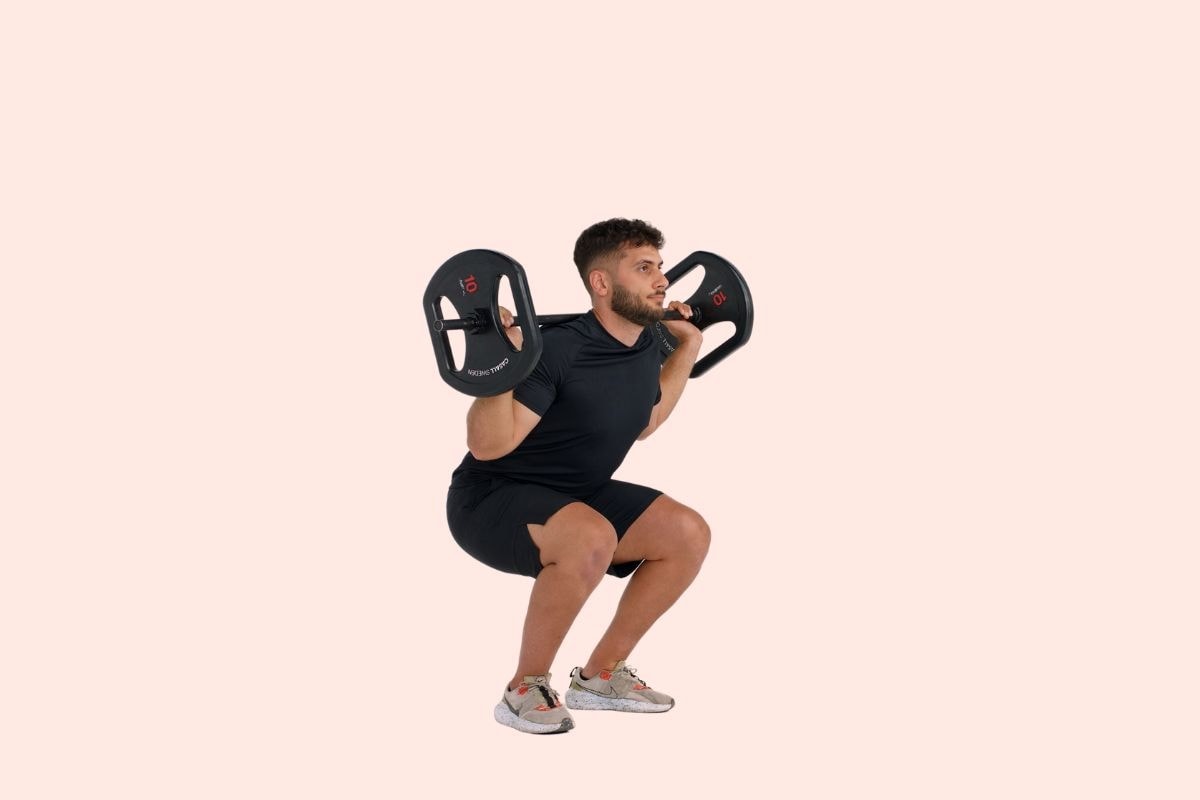
How to do it: Place the barbell across the upper part of the back (not the neck). Stand with your feet roughly shoulder-width apart and with your toes slightly rotated outwards. Brace your stomach and keep your chest upright. Bend at the hips and knees simultaneously and lower yourself controlled until the thighs are parallel to the floor, or as deep as you can with maintained technique. Then press yourself up through the heels.
To be able to do squats with good technique, you need good mobility in, above all, the ankles, hips, and thoracic spine. If mobility is limited, the heels may lift, the knees may fall in, or the upper body may lean forward. Then it can help to lower the weight, reduce the depth, or use a slight heel elevation until the technique is mastered.
Important to keep in mind:
- Keep the back neutral through the entire movement.
- Let the knees follow the direction of the toes.
- Avoid falling forward with the upper body.
- Brace the core before you start every repetition.
2. Deadlift
The deadlift trains the hamstrings, glutes, back, and grip strength. It is a classic hip hinge that strengthens the entire back of the body. Here the traditional deadlift is described, but there are several variants, for example, Romanian deadlifts, straight-leg deadlifts, and sumo deadlifts.
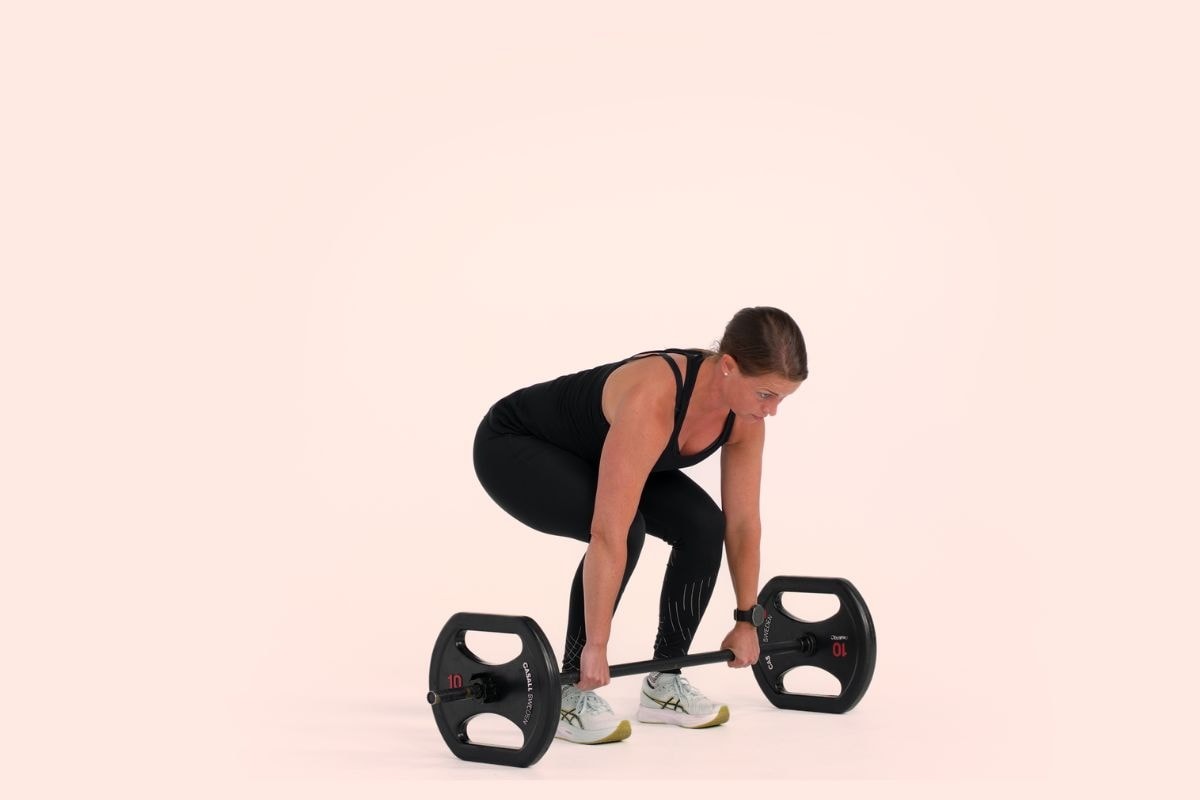
How to do it: Stand with your feet hip-width apart and place the bar close to your shins. Hinge at the hips and grip the bar with a straight back. Brace the core, press your feet into the floor, and lift the bar by straightening the hips and knees simultaneously. The bar should be kept close to the body all the way up. Then lower the barbell back down with control.
Important to keep in mind:
- Maintain a neutral back – avoid rounding the lower back.
- Lift by pushing off with the legs, not by “pulling” with the back.
- Keep the bar close to the body the whole time.
- Start every repetition from a stable position.
3. Bench press
The bench press is one of the most classic pressing exercises with a barbell. It primarily trains the chest, front of the shoulders, and triceps, and is a good exercise for building upper body strength.
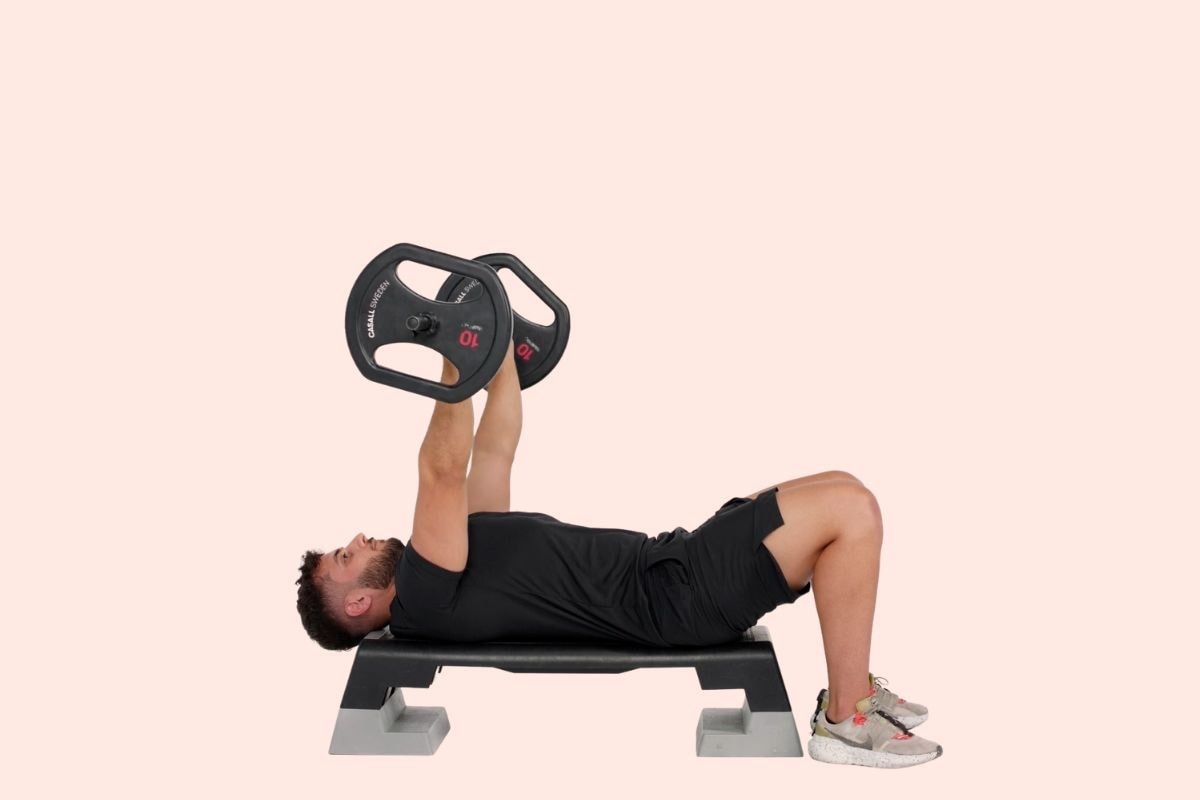
How to do it: Lie down on the bench with your eyes roughly under the bar. Place your feet stably on the floor. Grip the bar slightly wider than shoulder-width and let the shoulder blades be slightly drawn together and lowered (like “putting them in your back pockets”). Lift out the bar, lower it controlled toward the lower part of the chest, and then press up to straight arms without losing the tension in the body.
Important to keep in mind:
- Have your feet on the floor and create stability in the whole body.
- Keep the shoulder blades back/down for better control and shoulder comfort.
- Lower the bar with control and keep the wrists neutral (not “bent backwards”).
- Let the elbows go diagonally outwards but not straight to the sides – find a comfortable angle.
4. Shoulder press
The shoulder press, sometimes called the military press, is an effective exercise for the shoulders, triceps, and core stability. Since you press the weight over your head, good control and a strong, braced core are required.
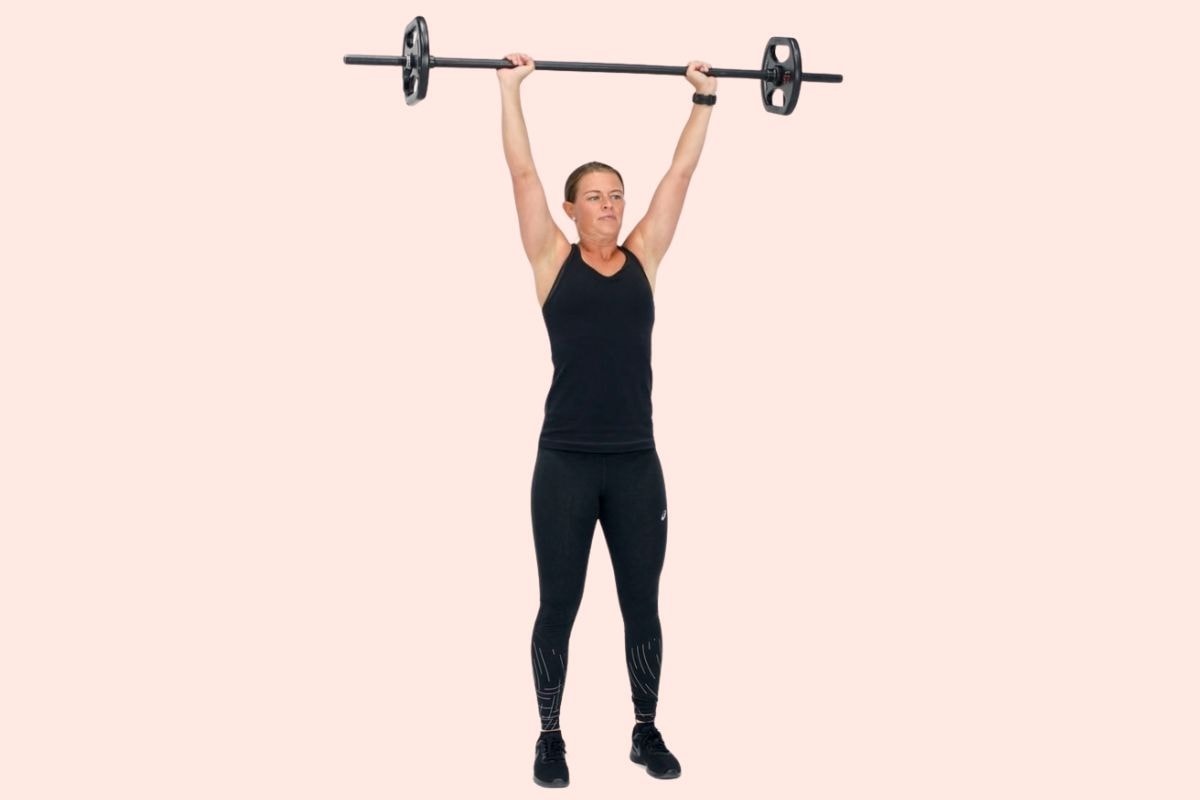
How to do it: Stand with your feet roughly hip-width apart and hold the bar at the upper chest/collarbone with a grip just outside the shoulders. Brace the stomach and glutes, keep the ribcage “locked down” (avoid arching the back). Press the bar straight up over the head. When the bar passes the forehead, you can move your head slightly forward so that the bar ends up above the middle of the foot. Lower controlled back to start.
Important to keep in mind:
- Brace the core and glutes the whole time to avoid excessive arching.
- Press the bar in as straight a line as possible (close to the face on the way up).
- Keep the wrists stacked over the forearms for stability.
- Avoid “throwing” the weight up; perform the movement calmly and controlled.
- If the shoulders are hurting: test a narrower grip or lower the weight and work on technique.
5. Hip thrust with barbell
The hip thrust is an effective exercise for strengthening and building up the gluteal muscles. It primarily activates the glutes, but also the hamstrings and core work to stabilize the movement.
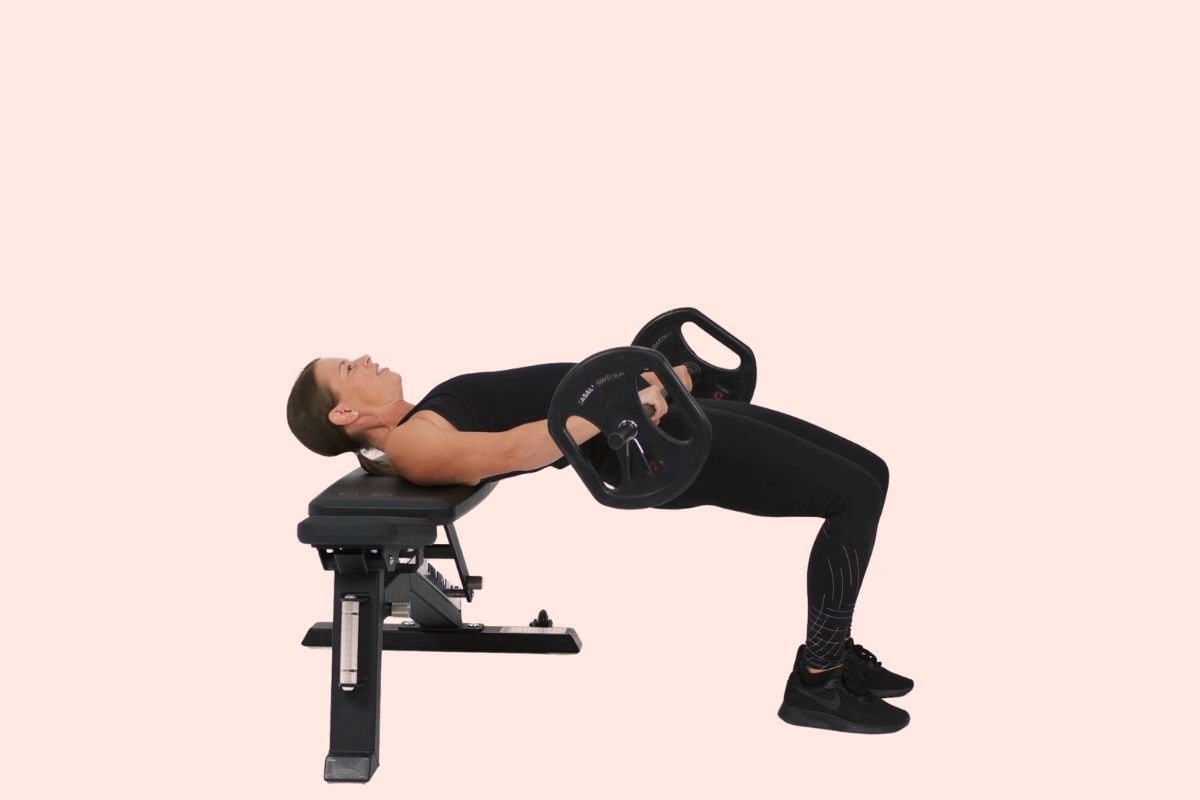
How to do it: Place the upper part of the back against a bench and roll the barbell in over the hips. Preferably use a pad to make it more comfortable. Place your feet roughly shoulder-width apart with the knees bent. Brace the stomach and press through the heels when you lift the hips upwards. In the top position, the body should form a straight line from shoulders to knees. Then lower the hips controlled back to the starting position.
Important to keep in mind:
- Focus on driving the movement with the glutes, not by overextending the lower back.
- Keep the core braced and avoid losing control in the top position.
- Ensure the knees follow the direction of the feet and do not fall inwards.
- Press through the heels to get better contact with the gluteal muscles.
6. Barbell row
The barbell row is a classic pulling exercise that strengthens the upper part of the back, back of the shoulders, and arms. It helps to build a strong back and contributes to better posture.
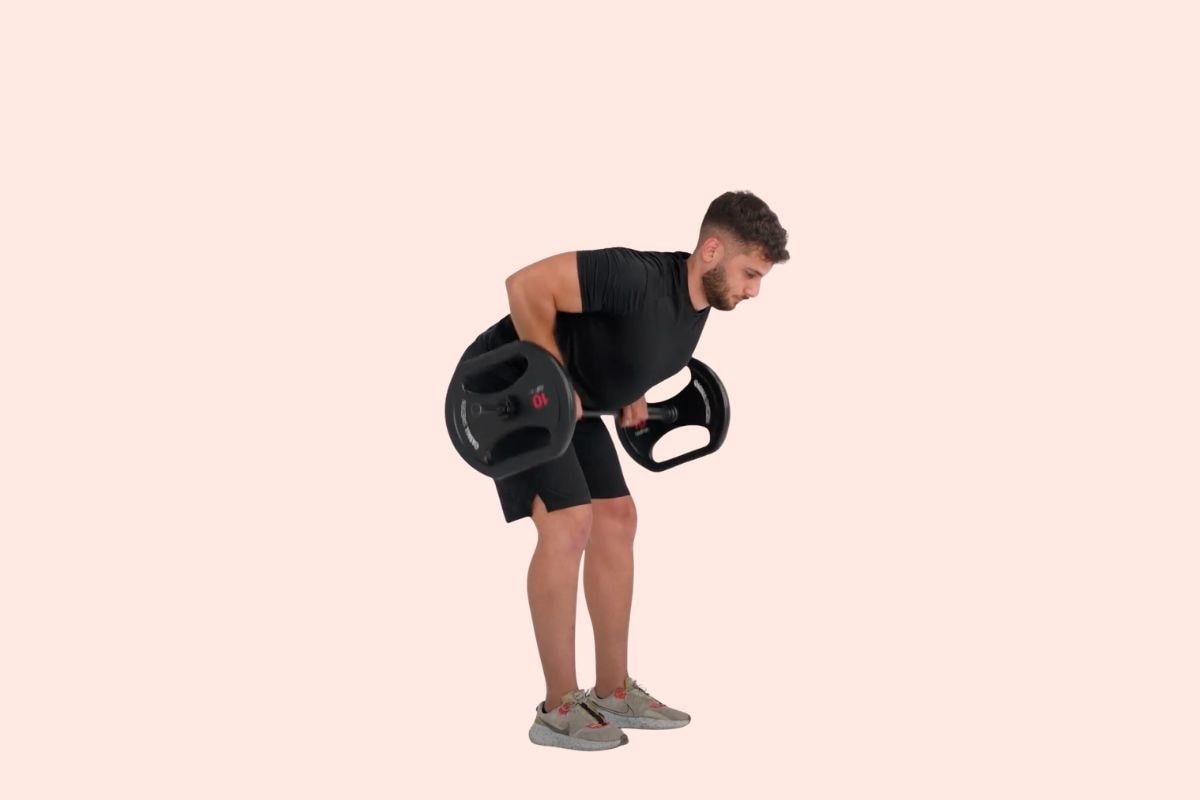
How to do it: Stand with your feet hip-width apart and grip the bar slightly wider than shoulder-width. Hinge at the hips and lean the upper body forward with a straight back. Keep the core braced and let the arms hang straight down. Pull the bar toward the lower part of the stomach by moving the elbows backwards. Then lower the bar controlled back to the starting position.
Important to keep in mind:
- Maintain a neutral back through the entire movement.
- Brace the core to keep the upper body stable.
- Pull the elbows backwards rather than lifting the bar with your hands.
- Avoid rocking with the upper body to get the weight up.
- Keep the neck in a neutral position with your gaze diagonally downwards.
Technique before weight
When you start with barbell training, the most important advice is: technique before weight. Start with an empty bar or very light weights to learn the movement pattern correctly. It reduces the risk of injuries and ensures that you activate the right muscles. Keep the chest proud the whole time during the exercise and keep the back straight. Start at a level that feels safe and increase the load gradually once the technique is mastered. It is also important to listen to the body; training should feel challenging but never hurt.
A good benchmark for beginners is to aim for 2–3 sessions a week. Train through the whole body per session, do 8–12 repetitions of each exercise in 2–3 sets. When you feel safe with the technique and can manage more than 12 repetitions, then it is time to add more weight.
Example training program
When you have learned the basic exercises with a barbell, it is time to start planning your training program. For best results, you should vary your exercises and training days, so that the body gets time to recover and build up strength. Use different exercises and methods, such as periodization and progression, to challenge yourself and avoid getting stuck in the same routine.
Session 1
- Squat: 3 sets x 8-12 reps
- Bench press: 3 sets x 8-12 reps
- Barbell row: 3 sets x 8-12 reps
Session 2
- Deadlift: 3 sets x 8-12 reps
- Shoulder press: 3 sets x 8-12 reps
- Hip thrust with barbell: 3 sets x 8-12 reps
Summary
Barbell training is a practical and versatile way to train the whole body. With the same equipment, you can work with several large muscle groups and adapt the load according to your level. This makes the training easy to follow up and develop over time. When you train regularly and increase the load successively, you will build up strength, while the training provides better body composition by increasing or preserving muscle mass. You do not need much equipment to get started, which makes the barbell an accessible alternative both at the gym and at home.


February 25, 2026
April 16, 2026
Start your weight loss journey with Yazen today
Everything you need to do is to create an account and answer some questions about your health
.svg)
.svg)
More articles


Smartwatch training: A tech tool to support movement, health and weight loss
Smartwatches and fitness trackers have become a common way to support exercise and overall health. For many people, a smartwatch can help you become more aware of your movement, sleep and day to day habits. It also works as an extension of your smartphone, letting you see notifications, control music and use apps straight from your wrist. But how can you use a smartwatch in a way that actually feels helpful when it comes to exercise and weight loss?
Strength training for weight loss – for results that last
Many people who want to lose weight focus mainly on food and cardio. But strength training during weight loss plays a key role in both your results and how your body feels in the long run. By building and maintaining muscle mass, you can boost fat burning, lower the risk of regaining weight, and support a stronger, more functional body.
Losing weight with home workouts – does it actually work?
For many people, working out at home feels like a more realistic way to get started than having to make it to the gym. When you can exercise on your own terms, in your own space, it lowers the barrier to getting going. And home workouts can be just as effective as training at the gym.