
Protein powder and weight loss: when it helps, how to use it, and who it’s for
Protein powder can be a handy support when you’re losing weight, especially if it feels hard to get enough protein once you’re eating fewer calories. For some people, it’s a convenient option that makes meal planning a bit easier. That said, protein powder isn’t essential and it doesn’t replace a nutritious, varied diet. In this article, we look at when protein powder can be helpful and how it might support weight loss.


.svg)
Why protein matters when you’re losing weight
Protein is one of the body’s key building blocks, and it plays a big role if you’re trying to lose weight. You’ll find protein in loads of everyday foods, like chicken, fish, meat, eggs, pulses (beans and lentils) and dairy.
A higher protein intake, alongside strength training, helps you hang on to muscle mass as your weight goes down. Muscle mass matters for overall health, strength and day-to-day function. It also affects your metabolism, which influences how much energy you use each day.
Protein can also help you feel fuller than fats or carbohydrates. That can make it easier to stick to portions that feel right and cut down on grazing between meals. For lots of people, feeling satisfied and eating regular meals is key for weight loss that lasts.
If you want to lose weight while keeping muscle, it can be sensible to aim a bit higher with protein, around 1.5 g of protein per kg of body weight per day.
What is protein powder, and what types are there?
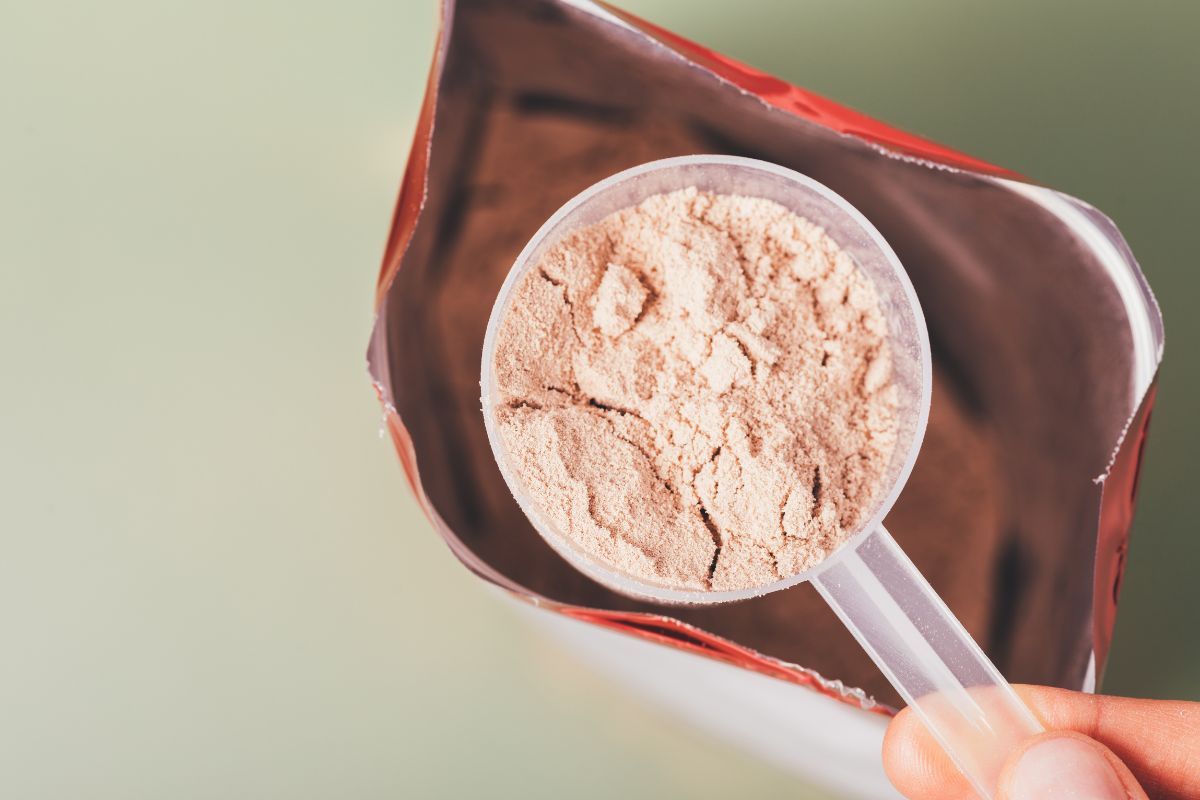
Protein powder is a supplement that contains protein in a concentrated form. It’s usually made from everyday ingredients like milk, soya, peas, oats or rice, and it can be a useful add-on if you want to increase your protein intake. Some of the most common types are:
Whey: made from milk and the most common and well-studied type out there. Whey mixes into a smooth liquid when you add water or milk. It’s absorbed quickly and is a popular option around workouts. Both whey and casein have a high biological value, meaning the body can use the protein easily.
Casein: also made from milk, but it’s broken down more slowly than whey. That’s because casein forms a gel-like texture in the stomach, which slows absorption. Because it holds onto liquid, it often ends up thicker and works well in things like protein pudding or creamy smoothies.
Plant-based options: made from plant sources like soya, peas, oats and rice. These can suit you if you can’t or don’t want to use milk-based products, for example with a milk protein allergy or if you eat a plant-based diet. Soya protein is the best-studied plant option and has high protein quality, meaning it contains all essential amino acids in enough amounts for the body’s needs.
There’s a huge range of protein powders on the market, so it can be worth comparing price and ingredients before you buy.
Can protein powder help when you want to lose weight?
There’s nothing “magic” about protein from a powder compared with protein from food, but it can have some practical advantages. It’s quick to prepare and easy to take with you, so it can be a really convenient option.
Because it’s concentrated, protein powder gives you a lot of protein for relatively few calories. It’s usually low in fat and has no added sugar. One serving often provides around 20 to 25 g of protein and roughly 120 to 130 kcal. That can be helpful if you’re trying to hit your protein target while keeping calories lower.
It can also be useful if your appetite is low, for example when you’re taking modern weight loss medicines, or after bariatric surgery when you need to keep portions small. In situations like that, protein powder can make it easier to get more protein in a smaller amount of food.
Protein powder on its own doesn’t cause weight loss. What matters is your overall energy intake over time. But in the right situation, it can help you get enough protein, support feeling full, and make it easier to maintain a calorie deficit.
How to use protein powder to boost your daily protein
- Start the day with protein: Add a scoop of protein powder to a smoothie, porridge, quark or Greek yoghurt.
- As a snack: A shake mixed with water can be an easy snack. For a thicker texture, blend with ice and/or frozen berries.
- Protein dessert: Mix casein with water or milk to make a pudding, then top with berries and a small handful of nuts or seeds.
- For flavour: Use protein powder to add flavour to porridge, yoghurt or smoothies.
- In baking and pancakes: Swap out some of the flour for protein powder in muffins, soft bakes or pancakes.
Does it matter when you take protein powder?
Whey protein is a popular choice because it’s high in protein and absorbed quickly. For a long time, people recommended having a shake straight after training, based on the idea of an “anabolic window”. Newer research suggests that window is much longer than previously thought. The body can be more responsive to protein for several hours, and up to a day, after a workout.
So timing seems to matter less than we once assumed. What appears most important for maintaining or building muscle is your total protein intake across the day. In a larger review of more than 20 studies, the benefit of taking protein immediately around training disappeared when researchers accounted for total daily protein intake.
The same idea applies to casein. It’s often been recommended in the evening because it breaks down more slowly, but research suggests the real-world difference is small. Whey and casein can have a similar effect overnight, as long as total protein intake is enough.
Limitations of protein powder
Protein powder can be a handy tool, but most people don’t need it. If you already get enough protein from food, adding powder usually won’t do much, and if it’s on top of what you already eat it can simply mean extra calories you didn’t plan for.
Protein powder also doesn’t give you the same nutrition or the same level of fullness as protein from food. Foods like dairy, eggs, fish, meat and pulses also provide vitamins, minerals, fibre and volume, things that are often missing from powder. That’s why protein powder works best as a supplement to a nutritious diet, not a replacement.
Protein powder as part of medication-supported weight loss
Modern weight loss medicines are becoming more common. One effect is reduced appetite, which can lead to greater weight loss. But it can also mean there’s a risk of losing some muscle mass along the way. Studies suggest around 25 to 39% of total weight loss with GLP-1 medicines comes from fat-free mass (FFM), which includes muscle mass.
To help reduce that, it’s important to prioritise protein in meals and, ideally, combine it with strength training. If appetite is low and portions are small, protein powder can be a practical way to increase protein intake.
Yazen’s own protein powder
Yazen also offers its own protein powder, developed in collaboration with registered dietitians, specifically for medication-supported weight management. It can be used alongside everyday food when needed, always as part of a personalised treatment plan and with support from your care team. The powder is designed with a focus on protein quality and taste, to make it easier to meet protein needs.
Summary
Protein matters during weight loss because it helps with fullness and supports keeping muscle mass when you’re eating fewer calories. By increasing protein intake, it can feel easier to stick to portions that suit you and reduce snacking, which helps you maintain a calorie deficit over time. Protein powder can be a practical support when it’s hard to get enough protein through food alone, as a complement to a nutritious, varied diet.


January 18, 2026
January 29, 2026
Start your weight loss journey with Yazen today
Everything you need to do is to create an account and answer some questions about your health
.svg)
.svg)
More articles


Intermittent fasting for weight loss: how it works, benefits, and risks
Intermittent fasting is a popular way to reduce energy intake for weight loss. For some people, it can be a helpful support on a weight journey, but it’s not right for everyone and needs careful thought to be safe and sustainable. In this article, we look at how intermittent fasting works, potential benefits, and risks you should be aware of.

Fasting for weight loss: guide, risks and benefits
Fasting and intermittent fasting are popular ways to lose weight and improve health – for example through 16:8 schedules and the 5:2 approach. Many people experience better appetite control and a clearer daily structure, but the method is not suitable for everyone and may involve risks. In this guide, we go through what fasting is, its potential benefits and risks, and how it can be combined with Yazen’s comprehensive treatment for overweight and obesity.

Low Metabolism: Weight and Diet
Many who struggle with their weight wonder if a low metabolism could be an explanation. In practice, there are usually several underlying causes for weight challenges, where metabolism is one of several factors. Metabolism plays a central role in how the body uses energy, but the connection between low metabolism, weight, and diet is often more complex than one might think.